
Climbing The Eiffel Tower with Autistic & ADHD Kids: How to Create Magical Paris Moments They'll Remember Forever
Updated: Jul 28
Planning an Eiffel Tower visit with kids who have autism or ADHD can feel completely overwhelming. The massive crowds and famously long queues are enough to make any neurodivergent family want to skip it entirely!
Having tried it first-hand with our own boys, we believe that with careful planning and a flexible approach, you can absolutely enjoy this iconic Paris landmark.
In this neurodivergent family survival guide, you will find all the practical tips, access secrets, and sensory advice you need to plan a calm, magical trip.
Quick Links
Why We Visited the Busiest Place in Paris with Autistic Kids
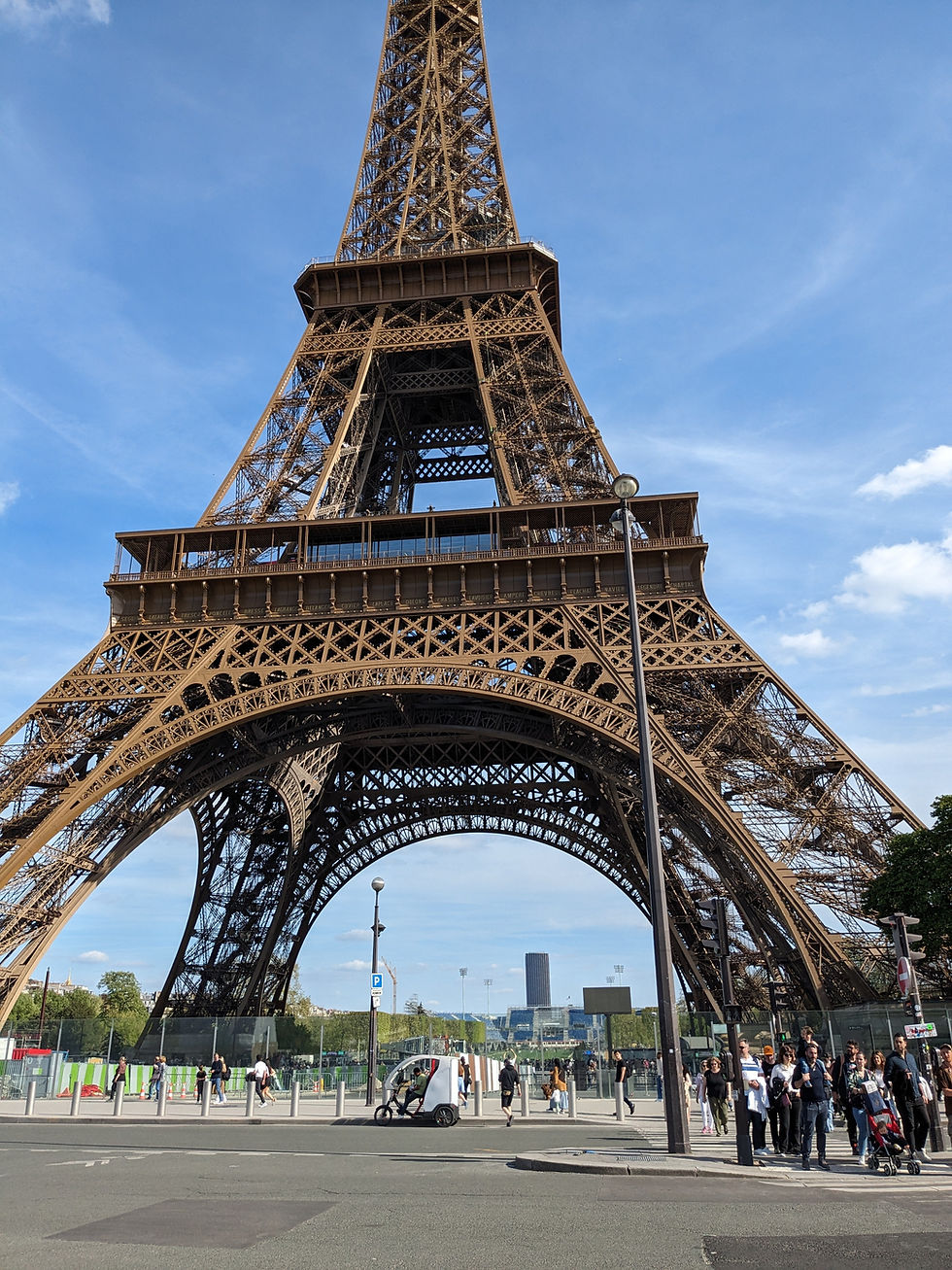
We chose to brave the Eiffel Tower because it features constantly in the French animated show Miraculous!—our youngest son is a massive fan, and our eldest loves it too.
When we told them about the plan, the boys were super excited at the thought of seeing Ladybug and Cat Noir's favourite landmark in real life.
If we wanted to have a successful visit, I knew we needed a carefully planned strategy designed to avoid the worst of the crowds and prevent queue meltdown.
How to Book Eiffel Tower Tickets as an Autistic Family
The Eiffel Tower is famous for its gruelling, hour-long queues. Standing in a tight line for that long is an immediate no-go for our neurodiverse family, as it is for most little ones!
When planning your trip, you essentially have two routes you can take to avoid standing in line on the day:
1. Buying Directly from the Official Eiffel Tower Website
If you want the cheapest tickets, you must buy them directly from the official attraction site.
The 60-Day Rule: Tickets are released 60 days in advance and sell out almost instantly during peak travel periods like Easter or summer.
The Pricing: A standard family ticket for the four of us to the second level cost around €58. They do offer a disabled concession and companion fares if you upload the correct paperwork.
The Risk: Tickets are strictly non-refundable and tied to a rigid time slot.
Our Real-Life Panic Stations Moment:
I completely forgot to log on exactly 60 days before our trip! I woke up in the middle of the night 54 days out in a absolute panic. When I logged on, almost everything was completely sold out.
Instead of visiting early in the morning when the boys were fresh, the only tickets left for our entire holiday week were for a Friday afternoon at 3:00 PM. I booked them on the spot, but it left me incredibly stressed about whether the boys would have enough left in their sensory "tanks" to cope that late in the week.

2. The Stress-Free Alternative: Booking a GetYourGuide Tour
If you miss the 60-day booking window like us, do not panic! Even if the tickets are sold out you do not have to stand in the general admission line on the day. There is another less stressful option.
You can use a trusted provider to bypass the ticket window completely. While organized tours have a higher upfront cost, they offer two massive benefits for neurodivergent families that make them worth the investment:
Guaranteed Entry: They hold ticket slots when the official website is entirely sold out.
Flexible Cancellation: Unlike the official site, most of these tickets allow you to cancel up to 24 hours in advance for a full refund—a lifesaver if your child is having a highly dysregulated day and you need to change your plans. (Check terms and conditions carefully before payment).
If you don't have the time to track the 60-day calendar, or if the official site is already sold out for your travel dates, save your sanity and book your Eiffel Tower Skip-the-Line Tour via GetYourGuide* in advance.
Eiffel Tower Disability Access Information
The Eiffel Tower website has an accessibility page with some useful information – but it doesn’t explicitly mention autism or hidden disability.
Navigating the New Eiffel Tower Security Checkpoints
It is no longer possible to just walk up to the base of the Eiffel Tower. To get anywhere near it visitors have to pass through a security checkpoint where they scan your day packs and purses etc...
This was new since my last visit so I had not prepared the boys for this, and when I saw the substantial queue for the security point on the main entry my heart sank.
Spotting a gateway that looked like it could be an express lane, I went and spoke to the guard manning its entry. I tried to explain (in bad French) that the boys were disabled and showed him the UK issued Access Card that we carry. It must have done the trick, because he kindly waved us through the empty checkpoint, allowing us to avoid the first queue altogether – we were very grateful.
Managing the Ticket Lines and the Concourse
There was more queuing inside, even with a timed entry ticket, although it was much, much smaller than the non-ticket queue.
My husband went with the boys to let them run around the concourse, while I waited in the queue for the 3pm session. I called the boys over when I neared the front, and then we all had to shuffle forward to get our tickets scanned.
The the little one found this bit quite difficult and kept trying to run off in various directions. The more he feels restrained, the more he struggles and shouts, so I was relieved when we were finally inside the tower, although we still to wait for the lift to the second floor.

Lifts vs. Stairs: Sensory and Crowd Advice
It was very cramped in the waiting space for the lift. Although we were mostly ok with this, for anyone with claustrophobia or crowd anxiety the lift would not be a suitable option. I would advise considering if you are physically able to take the stairs, perhaps just booking a ticket to the first floor if need be.
It was obvious that our eldest was also becoming overwhelmed by the proximity of so many people, and he needed to stand with his back to a wall and bury his head in my dress to take a sensory break. He also had a couple of fidget toys to play with.
From joining the timed ticketing queue, scanning tickets, and getting the lift to the second floor it probably took around 15 - 20 minutes. This is the absolute limit of what the boys can tolerate, and showed we were totally right to pre-book the tickets first.
Exploring the Eiffel Tower with Autistic and ADHD Children
Step 1: Navigating the Crowded Second Floor
The boys were ecstatic to finally step out of the lift onto the second floor! However, the entrance area was packed with people milling around, which felt a bit overwhelming.
To manage the sudden sensory transition, my husband took our youngest out the first exit he saw to find some fresh air and clear space. I took our eldest straight to the toilets. He loves washing his hands, so this gave him a quiet, familiar routine to help him calm down and regulate.
A Sensory Break in the Gift Shop
Next, we visited one of the gift shops. i knew that looking at the shiny, glittery knick-knacks would make our eldest feel happy and more grounded. While the items were pricey, I knew he would find it impossible to leave without a souvenir. I was delighted to find a reasonably priced Eiffel Tower Christmas tree decoration! He loves December’s festivities so much we call him "Mr. Christmas," so it was the perfect keepsake.
Once he felt calmer, we headed out to the viewing terraces. We quickly discovered that if you aren't worried about seeing everything in a strict order, it is easy to skip the busy spots and find quiet corners or empty terraces away from the ebb and flow of the crowds.
The boys absolutely loved the second floor, particularly:
Watching the boats on the River Seine
Finding the different compass directions marked on the floor
Looking down on the new Olympic stadiums being built [1]
Using the telescope viewers (don't forget to pack some €1 coins!)

Step 2: Moving Down to the First Floor
To avoid another cramped squash inside the lift, we walked down the 347 stairs to the first floor.
This was a fantastic idea! We saw hardly anyone, and the boys spent ages watching the lifts travel up and down through the metal grills. Our eldest loved staring into the lift shafts and waiting for the cabins to pass by.
The first floor felt significantly less busy than the second floor. It's key benefits:
Easy to find a quiet bench to sit down
A more peaceful place to eat the comfort snacks we'd brought
A little café stand with no queue where we could grab a quick coffee
The Famous Glass Floor Experience
The boys' absolute favourite thing on the first floor was walking over the famous glass floor! They loved standing and dancing while looking directly down at the ground below.
I honestly don’t know how they did it—it was so high up that I was genuinely terrified! Eventually, they persuaded me to step out onto the glass for a quick photo before I hopped right back off.

Step 3: Leaving the Eiffel Tower Safely
By 4:30 PM, the boys were starting to wane. They didn’t have enough energy left in their tanks to walk down the remaining 327 steps, so we had to use the exit lift. A large, tired crowd had already formed at the lift entrance. Once back on the ground, it didn’t take long to reach the exit. Our amazing Paris adventure had come to an end!
Top Travel Tip: The Eiffel Tower lifts have two compartments stacked on top of each other, - it is always worth checking the upstairs waiting space. Often people forget to go up to that level. If you are lucky the upper cabin of the lift will be nearly empty, meaning you can get in on your very first try!

Is the Eiffel Tower Autism-Friendly? Our Final Verdict
Going up the Eiffel Tower with the boys was a truly unforgettable experience, but it was not without its challenges.
The boys coped really well with the queueing and the crowds – due in part to the pre-visit preparation we had done with them. However it was still a full-on experience for them, and I think it was not ideal that it came at the end of the week.
I have been told that the mornings are the busiest time, so in the end, arriving later in the afternoon at 3pm probably worked to our advantage, even though it still felt busy. If you have children that can stay up late then consider going as late as possible, even after dinner, as that is when it is at its quietest.
Like with all things, going somewhere new for the first time is always the hardest visit. I am sure if we were to ever visit again (which the boys already want to do!) it would be even better – and the boys would be happy following the same route around the attraction that we did this time.
We all absolutely loved our time up the Eiffel tower, and we made so many incredible memories. I hope you do to.
Happy Travels x
Click here to Subscribe to our free Autism Travel newsletter
The Ultimate Paris Family Travel Planner
Planning a neurodivergent family trip requires matching a lot of moving pieces. Use this quick resource checklist to structure your upcoming Paris adventure:
Step 1: Getting to Paris (departing London)
The Station Guide: Read our complete walkthrough on navigating Eurostar Special Assistance from London to bypass stressful station queues.
Official Resource: Book your train assistance directly on the official Eurostar Special Assistance Page* before you travel.
Step 2: Navigating the City Top Tips
The Itinerary: Structure your days with our sensory-friendly 5-Night Relaxed Paris Itinerary for Families with Autistic Children.
Public Transport: Master the city tunnels, tickets, and buses with our guide on Using the Paris Metro and Bus System with Autistic Children.
Better yet - Skip the Metro Altogether! Avoid the overwhelming noise of underground tunnels by pre-booking a sensory-friendly Paris Hop-On Hop-Off Open-Top Bus Tour* or the TootBus Tour with optional cruise* with GetYourGuide. Tickets are refundable, and allow families to see the sights calmly at your own pace.
The Big Picture: Get our comprehensive overview of the city in the Best Activities for Autistic Kids in Paris


Comments