
Salcombe Beaches: A Sensory Guide to the Best Beaches for Families with Autistic Kids
Updated: Jul 9
The South Devon Coast is a spectacular landscape of hidden coves, tidal inlets, and soft sandy beaches.
For families with autistic children, it offers the ultimate setting for a relaxed, carefree English seaside holiday.

Best Beaches around Salcombe for Autistic Families

Having visited the South Hams for over 20 years — following in the footsteps of generations of our own family — we know that beach days with neurodivergent children require careful planning. A successful day means balancing beautiful scenery with reassuring routines and predictability, accessible parking, and opportunities for sensory regulation. We’ve done the trial and error so you don’t have to!
Here are our some of our favourite, autism-friendly beach destinations in and around Salcombe, complete with plenty of tips to help you pack the buckets and spades with confidence!
East Portlemouth and Mill Bay
To drive from Salcombe around to East Portlemouth on the opposite side of the estuary is a 15-mile journey that takes around 45 minutes in light traffic. Instead, we highly recommend taking the Salcombe to East Portlemouth Ferry - you’ll be stepping onto the opposite shore in just 5 minutes!
East Portlemouth Beach and Ferry
The ferry acts as an extremely useful water taxi for families who want a day out on the beach but would prefer to leave the car at home. It leaves from the bottom of the steps by the Ferry Inn in Salcombe and drops you off at the bottom of the boat ramp on East Portlemouth Beach.
Once you step off the boat ramp, you will find The Old Stable Cafe & Wood-Fired Sauna sitting right at the top of the ferry steps. It offers spectacular views across the water alongside an invigorating cold plunge experience! We have yet to try it but if it is anything like the one we did in northern Norway, the boys would love it!
East Portlemouth is the first of a number of beaches, and many people do stop here and enjoy the sand and views of Salcombe across the estuary.
Smalls Cove, Mill Bay, and Sunny Cove

However when the tide is out, you have the options of bypassing the steep cliff paths along the road edge and walking right along the flat beach shoreline beyond East Portlemouth. This stunning beach trek takes you past Smalls Cove, through to Mill Bay (which offers public toilets and a National Trust car park), and finally onto Sunny Cove.
We have done the walk out to Mill Bay and back numerous times with our boys (aged 7 and 9) and accompanied by friends with even younger children. It is definitely a doable walking distance, as long as you are not trying to carry too much stuff.
Special Activity: Harvesting Razor Clams!
On our last trip, we saw a large family group 'harvesting' razor clams from the sand during low tide. It looked like great fun, and after chatting with the parents we will definitely try it next time we visit. The mum said it was great for keeping their kids busy. Our OT recommended we find opportunities for the boys do as much 'busy work' as possible, so we were intrigued. She told me the trick is to spot tiny "figure-of-eight" holes in the wet sand at low tide. The kids pour standard table salt into the hole, and within seconds, the clam shoots right up out of the sand! The kids never get tired of the sudden visual "pop" and the tactile suck as they pull the clams out of the sand. It looked easy and lots of fun, and we will definitely be giving it a try on our next visit!
Sensory Considerations
Crowds: Because this crossing is so convenient, it gets extremely busy at peak times—particularly in August. Even with three boats running, you should be prepared to queue on the narrow steps. Queuing in a tight, bustling line can be tough for impatient or easily overwhelmed children.
Wait Strategy: We recommend sorting out your wait strategy in advance. Having one parent arrive early and hold your spot in the queue while the other waits with the kids in the nearby undercover area that also has some bench seating until the boat arrives, is a good option.
South Milton Sands
South Milton is my husbands favourite beach, as a child he spent many summer holidays here, swimming and rock-pooling at low tide.

This is still an extremely popular beach, and in summer crowds flock to enjoy the sheltered bay of crystal clear water and long sweep of golden sand looking out over Thurlestone Rock, an iconic sea stone archway a short distance off shore.
For many, including my husband who sailed a dinghy around it as a child, Thurlestone Rock is the symbol of South Devon.

Sensory considerations
Movement and discovery: A classic, wide sand bay with crystal-clear waters, South Milton is perfect for rock-pooling at low tide. There are plenty of rocks to scramble over and pools with a fascinating mix of colourful sea life, including crabs, starfish and sea urchins.
Calm waters: South Milton is generally considered a safe swimming beach. Because the bay is naturally sheltered, the waves are generally very calm. This provides a gentle, reassuring paddling experience if your child is nervous of the waves and frightened of loud, crashing surf or unpredictable water movement.
LOGISTICS
Food and Drink: We love to take a picnic to South Milton, but if you fancy a treat then takeaway refreshments are available from The Beach House Cafe. This pop-up food truck has a stretch tent covered seating area and is usually open everyday. They serve everything from casual hot chips to local treats seven days a week. Visit their website for more information.

Parking: There is a reasonably large car park at South Milton beach. This is owned by the National Trust and is free for members (non-members need to pay). Both the main car park and overflow spaces fill rapidly during peak times, so like with most of the places on this list it pays to arrive early.
Toilets: A small toilet block is available on site, near the Beach House Cafe. Although it is checked throughout the day it might be a good idea to take your own toilet paper.
Hope Cove
Hope Cove is one of my favourite villages in the South Hams, and I always make sure we visit, no matter how short our trip. The village sits nestled in the shelter of the Bolt Tail headland, which naturally blocks out much of the harsh, whistling coastal wind that can trigger sensory distress. There are two beaches at Hope Cove: Inner Hope and Outer Hope.
As a family, we prefer the dramatic scenery of Outer Hope and Mouthwell Beach — it is a soft, golden expanse backed by striking cliffs. At low tide, it transforms into a fascintating world for my sensory-seeking kids, offering caves to explore and easily accessed safe rock pools.
The waters are often calm and remain shallow for quite a distance, providing a gentle paddling experience, great if your child doesnt like big, crashing waves. We have spent many happy hours paddling and playing on its sandy shores.
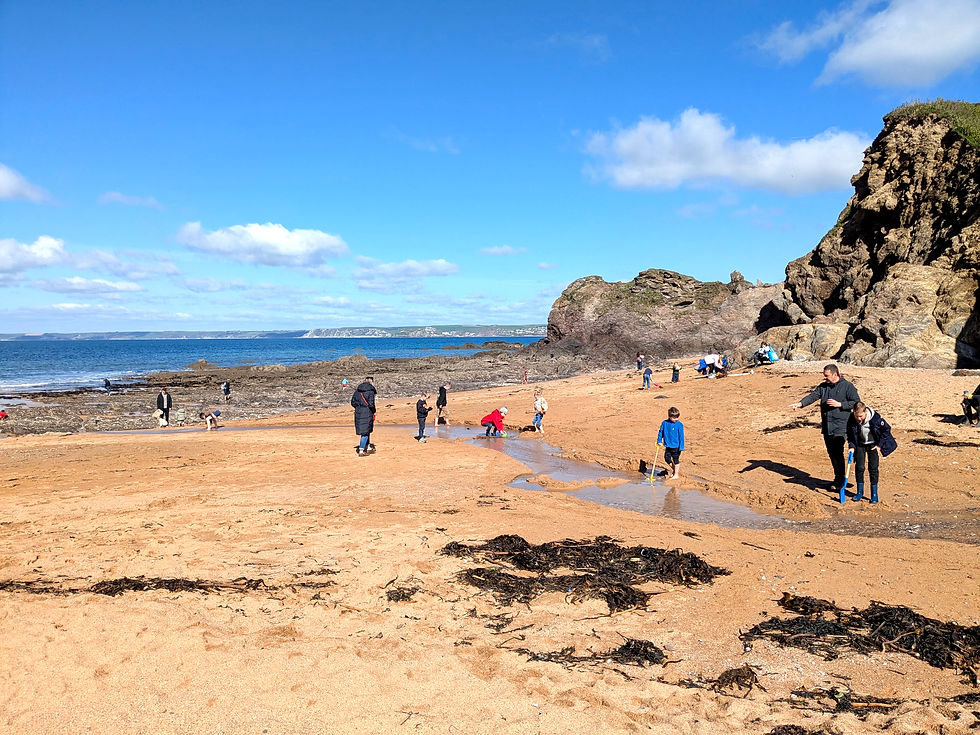
Access to the Beach
Getting down onto the sand at Mouthwell Sands is easy via a concrete slipway from the main road. This incline (while somewhat steep) is much friendlier for heavy, special-needs strollers than traditional beach steps.
Refreshments
The village's main pub, the Hope & Anchor, serves a range of traditional pub grub in an atmospheric setting just over the road from Mouthwell Beach. It does get very busy during peak season, so it is perhaps better suited for an out-of-season visit.

We also love grabbing sweet treats (including some divine gluten-free muffins) from The Curator, located right by the Outer Hope car park. It is a fantastic little takeaway hatch that serves great wood-roasted coffees and has a cute little outdoor terrace if your kids need a quick sensory break from the open beach. Open seasonally Fri - Sun 9am - 2pm, but check times before arriving.
South West Coast Path - My favourite hike in South Devon

Hope Cove lies on the South West Coast Path. If your family enjoys walking, there is fun walk that you can do, starting in the car park at South Milton Sands (National Trust-owned, charges apply for non-members).
From South Milton you can walk approximately 1 mile along the gloriously wild South West Coast cliff path that connects these two special places - before finally descending down into Hope Cove. It is a walk we have done many times. However, due to a few steep cliff drops and a bumpy, uneven surface, we haven't been brave enough to take our boys along it since they grew too heavy for their toddler backpack carriers. I can't wait to do it again when they are a little bit older!
Logistics
Parking: Compared to other beaches in the area, the parking in Hope Cove is pretty limited — you really have to arrive early (or be incredibly lucky!) to nab a space. Parking options are restricted to the Inner Hope Layby Car Park or the Hope By-Pass Parking field.
Blue Badge Note: Just like in Salcombe, you must pay the standard pay-and-display fee or use the mobile app, but your Blue Badge will automatically grant you an extra free hour on top of your paid session.
Mobile Signal Alert: Mobile phone signal can drop entirely in the cove. Make sure to carry a few £1 coins for the pay-and-display machine to avoid an anxious wait, or load the parking app on your phone before you arrive.
Toilets: Public toilets sit directly across from the Inner Hope slipway, useful for outfit changes if wet sand or damp clothing becomes a sensory issue.
Summer Beach Dog Rules
If your child is anxious around dogs or startled by unexpected barking, Mouthwell Beach is an excellent choice during the summer months due to strict local regulations:
Dogs are strictly banned from Mouthwell Sands between 1st May and 30th September from 10:00 AM to 7:00 PM daily. This provides a highly predictable, dog-free window for your beach day.
Early Mornings & Evenings: Outside of those daytime hours (before 10:00 AM and after 7:00 PM), or during the off-season (October to April), dogs are allowed back onto the sand.
Winter Beach Dog Rules
If you visit during the winter and want to avoid loose dogs altogether, head over the road to the nearby Harbour Beach (Inner Hope). Dogs are allowed there all year round, but they are legally required to be kept on a lead at all times, preventing them from running up to unsuspecting children.
Final Thoughts on visiting Salcombe Beaches
Taking an autistic child to the beach requires extra bags, extra planning, and plenty of patience. Remember you don't have to do it all!

Pack the ear defenders, a pop up sun / shelter tent, or throw a few extra changes of clothes in the boot for those times when splashing turns to soaking, and take things entirely at your child's pace, even if that means leaving after only half an hour!
We hope you love these beaches as much as do!
Happy Travels x
Explore the Rest of the Series
Looking for a break from the sand? Check out the rest of our South Hams neurodivergent travel guides:
Over to You!
Have you visited Salcombe or the surrounding South Devon coast with your family? Which of these three beaches sounds like the best fit for your children? If you have any hidden, sensory-friendly beach tips to add, please drop them in the comments below—I’d love to hear your stories!
Related Articles


Comments