
Visiting the Louvre with Autistic Kids: Free Entry & Queue Skip Guide
The Musée du Louvre in Paris is the most visited art gallery in the world, attracting over 9 million visitors in 2025. This equates to approximately 25,000–28,000 visitors each day—with nearly all of them filing through one gallery to see the Mona Lisa!
On our first visit to Paris when the boys were 6 and 8, we had great fun exploring the courtyard and seeing the Louvre Glass Pyramids (read our relaxed short break Paris family itinerary here), but recognised that the crowds and strict "don't touch" rules wouldn't work for taking our boys inside the gallery itself.
However, on our return to Paris in October 2026, I decided to try taking my eldest (now 10), who is both autistic and has ADHD, as he was very keen to see the Mona Lisa. Because our youngest son is very tactile and still loves to touch everything, we decided it was best for him to have downtime at our apartment with my husband (and we made sure to do some of his favourite things in the afternoon so he didn't feel left out).
With lots of research and careful planning, our visit turned out to be a fascinating, stress free success. Read on to discover how, with a few simple steps, your family can enjoy the world's most famous museum and avoid the worst of the sensory overwhelm.

Quick Sensory & Ticket Summary for Louvre Museum Paris
Autistic Kids Sensory Verdict: Autism-friendly - Manageable with a short, focused plan. Choose an evening slot (like 6:00 pm on Wednesdays or Fridays) and stick to one or two must-see rooms rather than trying to explore the whole museum.
Best Time to Visit:
At 9am, right on opening time or during one of their late afternoon / evening openings (from 6:00 pm)—crowds in the courtyard and galleries drop dramatically compared to midday.
Disabled Priority Entry (No need to queue):
An autistic child and their carer do not need to queue. There are disability priority lines at all three of the main Louvre entrances. Make sure you have official Disability ID, we used the UK National Disability Card and be prepared to show your pre-booked ticket reservation.
Free Carer Tickets:
Under-18s, disabled visitors, and one accompanying carer enter FREE (just reserve €0 timed-entry slots online via the official Louvre website and bring your Disability ID).
Forgotten your Disability ID? Or need to ensure your whole family can enter at the exact same time as your child and essential carer?
We recommend securing skip-the-line timed entry tickets via GetYourGuide* — ideally in advance, though there is often late availability when official slots sell out.
How We Bypassed the Huge Louvre Queues: The 3 Accessible Entrances Explained
The Louvre is packed every day from around 10am to 4:30pm, during this period the sheer scale of the queues snaking across the courtyard is enough to trigger pre-visit panic for any neurodivergent family.
When we took our youngest down to see the glass pyramids (and to find the disabled entrance before our later 6pm visit) around midday I was shocked by the length of the timed entry queues spreading out across the main concourse. There were people everywhere, it felt like a melee!

Fortunately, the Louvre's accessibility system makes bypassing that chaos surprisingly straightforward. There are three main entrances into the Louvre, and each one has a priority entry for visitors with disabilities and an accompanying carer.
1. Carrousel du Louvre (99 Rue de Rivoli)
The quietest and least busy entrance is the Carrousel du Louvre. From here you can take a lift straight down to interior of the Louvre complex, followed by a reasonable walk through its retail passageway.
You will likely encounter crowds milling around and perusing its upmarket shops like Ladurée (yes, guilty here!). Once you reach the Inverted Pyramid, the security checkpoint has a clearly separated, quieter priority lane where you can show your documents and pass through without having to join the main queue.
2. Louvre Pyramid Entrance
If you want the ‘wow’ factor moment of descending the huge escalator down into the pyramid then you will need to brave the main courtyard queues and make your way to the very front doors. There you will see a small wheelchair sign – approach the guard and have your disability ID and ticket reservation to hand.
3. Passage Richelieu Entrance
We chose this third option, and walked towards the arched walkway on the left-hand side of the courtyard (when facing the Pyramid with the Tuileries Gardens behind you).
Through this dark, covered exterior hallway is the Passage Richelieu priority and accessible entrance.
Walking past the Passage Richelieu entrance around midday we saw a small number of people (maybe 10 - 15) waiting to have their bags scanned.
When we returned just before our 6:00 pm evening slot however, there was not a single person queuing and we walked straight through.
The queue attendant asked to see our disabled ticket reservations and checked our UK National Disability Card (read our step-by-step guide to getting a UK National Disability Card here).
After walking through the security scanner (they were totally fine about my mum not going through because she has a heart device, and didn’t want to see her proof card) we descended a short escalator down into the main concourse.
Heads-Up at the Ticket Barriers Inside the Atrium:
Even though there was zero queue at the exterior security doors, we did hit a brief, unexpected crush once we reached the main underground atrium. Because all three entrances funnel into the central pyramid hall, there was a tight pinch-point of people bunched together waiting to scan their tickets at the wing barriers (Denon, Sully, and Richelieu).
Having my mum's wheelchair helped carve out a little personal space, and keeping ear defenders and a Sunflower Lanyard visible helped us move through quickly—just prepare your child for a noisy 2–3 minute bottleneck right before you enter the quiet galleries.

Free Entry Rules for Disabled Visitors, Carers & Kids
A standard adult ticket to the Louvre starts from 32 euros. However they do offer a range of discounted entry tickets, including:
Under-18s: Entry to the Louvre's permanent collections is free for all children under 18 (bring a photo or copy of their passport on your phone in case staff ask to verify age).
Disabled Visitors & Carers: Visitors with a recognised disability ID (such as the UK National Disability Card, Access Card, or DLA/PIP letter) plus one accompanying adult carer receive free admission and priority entry—you will still need to book your tickets in advance.
Additional Adults in Your Group:
Any extra adults who are not the designated carer will need a standard timed-entry ticket (or you can book 24-hour refundable Louvre tickets via GetYourGuide* if you want cancellation flexibility).
Borrowing a Free Louvre Wheelchair (Don't Forget Photo ID!)
On this trip, we were visiting with my mum, who now uses a wheelchair to navigate large galleries due to heart failure. The Louvre lends wheelchairs completely free of charge from the Assistance Desk underneath the Pyramid, although they cannot be booked in advance.
The wheelchair was comfortable and easy to manoeuvre — making it a fantastic option if you are travelling with a grandparent or an autistic child who struggles with huge walking distances and crowds.
Crucial Parent Pro-Tip: To borrow a wheelchair, you must leave a physical photo ID (such as a passport) as a deposit. We hadn't realised this beforehand and hadn't brought our passports or driving licenses with us!
Thankfully, the staff accepted my son's National Disability Card as his photo ID deposit so my mum could keep her own disability card on her to verify her free ticket and priority access at gallery checkpoints.
Viewing the Mona Lisa with Autistic Kids (And How to Beat the Crush)
For most families, seeing the Mona Lisa (La Joconde in the Salle des États) is the #1 goal—and also the biggest challenge.
I have heard many stories of people being disappointed when they finally saw the Mona Lisa but don't let that put you off. While the portrait may be smaller in real life than you expect, it is an iconic image that still delivered a real pinch me moment – worth all the planning and research it took us to get there!
Because we were accompanying my mum in her wheelchair, we also experienced first-hand how the Louvre manages priority access inside this room:
Entering via the Exit Door
Gallery staff directed us straight in through the exit doors of the Mona Lisa room, completely bypassing the long, winding rope queue that snakes from the official entrance on the other side of the gallery. We were allowed to come and go through this door as we pleased.
The Dedicated Wheelchair Viewing Enclosure
Directly in front of the painting, the Louvre has a cordoned-off viewing space exclusively for wheelchair users and their companions. Because we were pushing my mum's wheelchair, my son and I were able to join her inside this calm space with zero queueing, zero pushing, and a clear, unobstructed view of the Mona Lisa.
Honest Heads-Up for Autistic Families Visiting the Louvre on Foot:
If you are visiting without a wheelchair and using a National Disability Card or DLA letter, staff will generally still let you bypass the main rope queue into the room—however, you likely will not be permitted inside the physical wheelchair enclosure itself.
If your child struggles with dense crowds pressing in around them, prepare them beforehand that the main viewing floor gets tightly packed, have ear defenders ready, and stick to an early morning (9:00 am) or late evening slot. Or ask for a wheelchair.
Sensory Triggers Inside and Outside the Louvre (And How We Managed Them)
Even with priority entry, the Louvre is an intense sensory environment, with a labyrinthine interior, multiple routes around and a lot of ambient noise. Keeping these four triggers in mind will help you all stay regulated:
Visual & Spatial Overwhelm:
The Museum comprises a series of vast, echoing marble halls, a towering ceiling under the pyramid, and corridors with doors leading off towards staircases and lifts. Working out where to go can feel disorienting. However staff are on hand to help with directions and there are maps available.
Endless Walking / Physical Fatigue
There is No Way You Can See it All! Having a clear "mission" (like heading straight to the Mona Lisa and one or two nearby sculptures) will prevent exhaustion and avoid visual fatigue. If there are particular things you want to see, write down the titles of other works / artists in advance like we did, then show your list to the gallery attendants – they were very polite and helpful in providing directions.
Strict "No Touching" Rules:
Unlike interactive science museums, security guards enforce strict boundaries around every statue and painting. Reviewing this rule calmly with our eldest before walking through the doors avoided sudden reprimands—and was the exact reason we left our tactile 8-year-old to enjoy a relaxed evening at the apartment instead.
If you need active options with more sensory freedom check out our post on the 6 best activities for autistic kids in Paris - our youngest loved them all and they suited him so much better.
Real-World French Language Hack - "Je suis désolée, il est autiste"
Earlier that day when we walked through the courtyard, our tactile 8-year-old slipped past the low barriers around the main Glass Pyramid and pressed his hands and face right up against the glass to peek inside—which is strictly forbidden!
Security guards were over immediately, which could easily have escalated into a full scale panicked meltdown. However, as soon as I said, "Je suis désolée, il est autiste" ("I am sorry, he is autistic"), their whole demeanour softened. They stepped back and gave me the calm space I needed to coax him away from the glass and back onto the path without any fuss.
Having that one simple French sentence ready in your head (or written on a card) is a genuine lifesaver in Paris. You could also use - "Mon fils / fille est autiste" - my son / daughter is autistic.

Background Echo & Chatter:
Even at 6:00 pm, the low hum of footsteps and voices echoes across stone floors. Packing lightweight ear defenders or discreet earplugs takes the edge off quickly.
Temperature Shifts:
Galleries can feel warm and sometimes stuffy once you start moving around—dressing in easy-to-remove layers keeps everyone comfortable. We had wrapped up snuggly against the cool early evening, and halfway into our visit we all became overly warm. I really wished we’d made use of the free lockers and stashed our coats in the central entrance on arrival!
Keep Your Visit Short + Important Exit Warning
We kept our entire visit to around 90 minutes (arriving for 6:00 pm and leaving at 7:30 pm)—long enough for my eldest to see the Mona Lisa and soak up the atmosphere without hitting sensory burnout.
Due to my own personal interests we kept to the French and Italian Painting Galleries, which are conveniently either side of the main Mona Lisa Gallery. The French Gallery in particular contained some absolutely gigantic paintings – it was great being able to step right back and admire them without a sea of people blocking my view – another reason to visit during the late session.
⚠️ Important Evening Exit Warning (If You Use the Priority Entrance!)
If you book a 6:00 pm evening slot and enter through the Passage Richelieu accessible entrance, be aware that this specific entrance and its lifts close early in the evening.
When we finished our visit at 7:30 pm, we couldn't exit the same way we came in. Instead, we had to walk the full distance through the underground Carrousel du Louvre shopping galleries before finding an open lift back up to street level. Factor in an extra 10 to 15 minutes and keep a final snack or fidget toy handy for that exit walk so a tired child doesn't melt down right at the finish line!
Once back outside, stepping into the fresh evening air of the Louvre courtyard was a relief. To avoid navigating hot, noisy metro stairs after a long evening, we stuck to above-ground routes on a journey back to the apartment - read more in our Paris Metro & Bus Guide for Autistic Families.
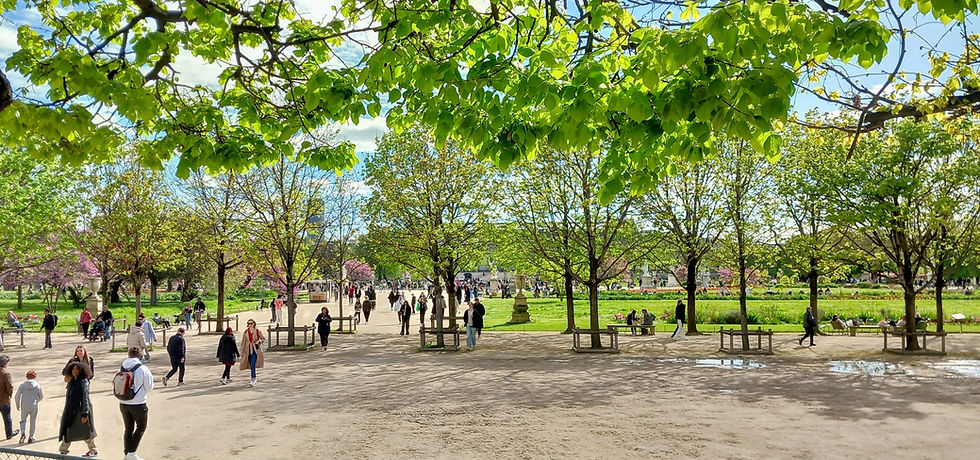
If you are visiting during the early morning slot then strolling across into the Tuileries Gardens after you leave gives kids an immediate, open space to decompress, and right at the very end is a vintage carousel with exotic animals that my boys adore!
Frequently Asked Questions: Visiting the Louvre with Autistic Kids
Do autistic visitors and carers get free entry to the Louvre?
Yes. Visitors with a recognised disability ID (such as a UK National Disability Card, Nimbus Access Card, or DLA/PIP award letter) plus one accompanying carer receive free admission and priority queue-skipping access to the Louvre. Children under 18 also enter free of charge.
Which entrance should disabled or autistic visitors use at the Louvre?
Use the Passage Richelieu accessible entrance, located under the arches on the left-hand side of the courtyard when facing the main glass Pyramid (with the Tuileries Gardens behind you). Show your disability ID to security staff at this doorway to bypass the main Pyramid queues.
Can you skip the Mona Lisa entrance queue if waiting is difficult for your autistic child?
Yes, staff generally allow visitors with a disability ID to bypass the winding rope queue into the Mona Lisa gallery. However, the cordoned-off front viewing platform is reserved specifically for wheelchair users and their companions—so families visiting on foot should prepare their child for tighter crowds on the main viewing floor.
What is the quietest time to visit the Louvre with an autistic child?
Late-afternoon and evening openings (from 6:00 pm on Wednesdays and Fridays) or the very first 9:00 am morning slot offer noticeably smaller crowds than midday. Keep in mind that the Passage Richelieu accessible entrance closes earlier in the evening, so you will exit via the main Pyramid or underground Carrousel du Louvre lifts.
More Autism-Friendly Paris & Eurostar Guides
Planning the rest of your family trip to Paris? Explore our other tried-and-tested sensory guides:
🗼 Next Paris Landmark: Climbing the Eiffel Tower with Autistic Kids (Including the Summit)
🚄 Getting To Paris Stress-Free: Eurostar Special Assistance Guide for Autistic Families
Final Thoughts: Is the Louvre Worth It with Autistic Kids?
Going into this trip, I honestly wasn't sure if taking an autistic 10-year-old into the world's busiest museum was a step too far. By keeping our visit short (90 minutes), choosing a 6:00 pm evening slot, and using our UK National Disability Card to skip the queues, it turned into one of the proudest, calmest highlights of our whole Paris holiday.
One of my favourite unexpected moments of the whole evening was standing underneath the main glass Pyramid inside the atrium and looking straight up—seeing the giant geometric glass roof lit up from inside against the dark Paris night sky was genuinely breath-taking, and my son stood mesmerised taking it all in.

Remember—you don't have to "do" the whole Louvre to make it worthwhile. Seeing one iconic painting without a meltdown is a massive win!
Happy travels,
Layla x
Join Our Autism Travel Community
Planning a vacation with sensory-sensitive kids doesn't have to be overwhelming.
Sign up to our travel newsletter The Sunflower Suitcase and receive our free 18-page print-at-home Kids Travel Travel Passport download in your inbox today.
You will also receive lots of great travel tips and strategies to reduce your own stress and manage anxiety when times get tough!


Comments